
When you start thinking about upgrading your heating or cooling system, there are many different decisions you’ll need to make. One of the most important is the type of unit you want to get. Two popular options are ductless mini-splits and traditional HVAC units. Understanding what both provide can help you make a better-informed decision about which one is right for your home.
Understanding Traditional HVAC Units
Traditional HVAC solutions include central air conditioners, furnaces, and boilers. Both central ACs and furnaces rely on ductwork to distribute hot and cold air throughout your home. Boilers rely on piping that connects with radiators throughout your rooms. When you opt to get a furnace or boiler, they run on gas, oil, or electricity. With a traditional setup, you need both a central air conditioning system and a furnace or boiler. This ensures that your home stays comfortable throughout the summer and winter seasons.
Understanding Ductless Mini-Split Systems
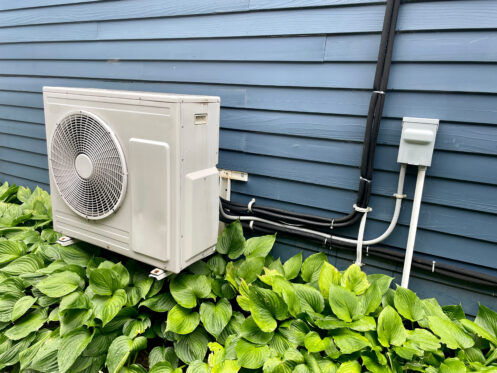
Ductless mini-split systems are all-inclusive, meaning they provide both heating and cooling in one system. These systems comprise three main components. These include indoor air handler units that get placed in each room of your home. Each unit is controlled separately from the next, so you can set different temperatures in different rooms. An outdoor condenser unit is placed outside your home. Refrigerant and electrical lines connect the indoor air handler units to the outdoor condenser unit.
Mini-split systems work thanks to a substance known as refrigerant. Refrigerant absorbs heat from one location and disperses it to another. During the summer months, it will absorb heat from inside your home and take it outdoors. In the winter months, it will absorb heat from the outdoors and bring it into your home to warm it. Ductless systems rely solely on electricity to run.
Energy-Efficiency
One of the biggest concerns that homeowners have when upgrading their HVAC system is operating efficiency. The more efficient your system is, the less energy it consumes and the lower your utility bills will be. Each HVAC unit will have its own energy efficiency rating. For air conditioning systems, this is a Seasonal Energy Efficiency Ratio, or SEER rating.
For furnaces and boilers, this is an Annual Fuel Utilization Efficiency Ratio, or AFUE rating for short. The higher the rating, the more efficient the system is. Central air conditioners, furnaces, and boilers all come in both standard and high-efficiency units. High-efficiency units come at a premium price but offer better operating efficiency.
While traditional HVAC systems can be very efficient, ductless mini-split systems are inherently more efficient. One of the reasons they’re more efficient is that they aren’t prone to air loss through ducting leaks. With traditional furnaces and central air conditioning systems, homeowners can lose between 20 and 30% of their treated air.
Another reason mini-splits tend to be more efficient is that they use inverter technology. This successfully modulates the compressor speed to match your demand rather than turning on full blast. Additionally, mini-splits give you the ability to set different temperatures in different zones of your home. This can allow you to optimize comfort without consuming as much energy.
Installation Complexity
Traditional HVAC systems require extensive installation to function properly. For central air conditioners and furnaces, there needs to be adequate space for ductwork and an indoor air handler unit. This can be fairly easy to do if you have a newer home that’s being constructed. However, retrofitting an existing home with new ductwork can be prohibitively expensive. The same holds for boiler systems that require piping and radiator installation.
One of the most significant advantages of using a ductless mini-split system is its ease of installation. This system only requires small holes, usually about three to four inches, for refrigerant and electrical lines to run. These get placed behind each air handler unit and connect to the outdoor condenser unit. This is very minimally invasive to your home and makes installation fairly quick for these systems.
Comfort
If you have an appropriately installed traditional HVAC system, it should offer even air distribution throughout all the vents in your home. This should provide a consistent temperature for all your rooms. Modern advancements allow you to add zone controls through a series of dampers and multiple thermostats to these older systems.
Ductless mini-split systems have a strong advantage over traditional HVAC units with respect to zoning. The way these systems are designed is that each indoor air handler unit can be set independently from the rest. This can allow you to better maximize your comfort throughout your home.
For example, you may find it more comfortable to have a lower temperature in your bedroom to sleep better at night. With a traditional HVAC system, you would have to turn down the temperature before bedtime to allow it to drop to your desired setting. With a mini-split system, you can simply set your bedroom air handler to a lower temperature than your living or kitchen air handler. This provides more convenience and comfort for homeowners.
Lifespan
The prospective longevity of a particular HVAC system is a big factor when determining which one to purchase. Furnaces and boilers that burn gas or oil last about 15 to 20 years, while those using electricity will last between 20 and 30 years. Heat pumps typically last about 10 to 15 years.
Ductless mini-split systems have a usable lifespan of about 15 to 20 years. It’s important to note that this lifespan is assuming your unit gets routine care and upkeep. HVAC systems that don’t get regular maintenance or prompt repairs will have a much shorter lifespan.
Making Your Ultimate Decision
It’s important to note that there’s no one-size-fits-all solution when it comes to choosing between traditional HVAC units and ductless mini-split systems. The specific application for your home will determine which system is right. Homeowners who have older homes that lack traditional ductwork or have aging ductwork that needs to be replaced may benefit from a mini-split.
If you have a traditional boiler system that doesn’t have adequate ducting for an essential AC unit, you may want to consider a mini-split. If you have a home addition, garage, or finished attic space and you’re looking to control the temperature, consider a mini-split. While a mini-split can be a great choice for all these applications, there are other times when a traditional system is ideal.
For example, let’s say that your home already has effective ductwork and you need to upgrade your central air conditioner or furnace. It’s typically more cost-effective to purchase an individual furnace or central AC unit than purchase a mini-split system. If you’re building a new home, you may want to consider a traditional HVAC system. This is because you have easy access to all your wall and floor cavities for ductwork installation.
Expert HVAC Installation Services
Ahoy! Cooling & Heating provides expert HVAC installation in Tampa, FL. We can also help with all your HVAC repair, replacement, and tune-up needs. Simply call our office today to book your next service consultation.